
Necessary Discomfort: Why Change Doesn’t Always Feel Good
When I first started therapy and counselling training, I thought insight would be the key.
I thought that if I could understand what was “wrong” with me and why, I would be able to change course. I thought the right way forward would become obvious. More than that, I thought it would feel right.
This seems reasonable, doesn’t it?
If I know where a pattern came from, surely I can stop repeating it. If I understand why I people-please, over-explain, over-function, or avoid conflict, surely I can choose something different. If I can see the cage, surely I can walk out of it.
Except that is not always how change works.
Sometimes you understand the pattern. You know it no longer serves you. You even know what you want to do differently.
And then, when you try, every part of you screams:
No. Absolutely not. This is wrong. This is unsafe. Go back.
Being wrong can feel like being right
One of the strangest things about being human is that being wrong does not usually feel like being wrong.
It feels like being right.
If it felt wrong, we would probably stop doing it. But until we realise something is wrong, the old belief often feels obvious, natural, sensible, even protective.
So if you learned that pleasing people kept you safe, people-pleasing may feel right.
If you learned that being useful made you valuable, over-functioning may feel right.
If you learned that disagreement meant danger, keeping the peace may feel right.
If you learned that rest had to be earned, stopping may feel wrong.
The problem is that when old patterns finally start to loosen, the new behaviour may not feel liberating at first.
It may feel rude.
Selfish.
Dangerous.
Disloyal.
Lazy.
Cold.
Mean.
Exposing.
Unbearably uncomfortable.
And this is the bit about change that I think we do not talk about enough.
Doing the healthier thing does not always feel healthy at first.
Discomfort is not always danger
For people-pleasers, discomfort often gets interpreted as evidence of wrongdoing.
Someone is disappointed, and it feels like you have done something bad.
You say no, and guilt floods your chest.
You tell the truth, and nausea rises.
You don’t rush in to fix the situation, and your whole body feels restless, exposed, almost ill.
You set a boundary, and then spend hours wondering whether you have gone too far.
It can be very hard to tell the difference between:
“This feels uncomfortable because I am doing something harmful”
and
“This feels uncomfortable because I am doing something unfamiliar.”
That distinction matters.
Because discomfort is not always danger.
Sometimes discomfort is information that something needs attention.
Sometimes it is a warning.
Sometimes it tells us that a situation is not safe, that a boundary has been crossed, or that we are abandoning ourselves.
But sometimes discomfort appears because an old survival pattern has been interrupted.
Your body is used to the old route. It knows the old script. It may not like the old script, but at least it knows what comes next.
A new response can feel unsafe simply because it is unfamiliar.
The old pattern may feel safer because it is familiar
Imagine wearing in a new pair of shoes.
Even if they are better for you, even if they fit well, even if they will eventually support you more comfortably than the old pair, they may still rub at first.
Your feet are used to the shape of the old shoes.
The worn-down soles. The stretched leather. The familiar pressure points. The places that hurt, but in a way you know.
New shoes can feel wrong before they feel right.
I think old patterns can be like that.
People-pleasing may be painful, but it is familiar.
Over-explaining may be exhausting, but it is familiar.
Working far beyond your capacity may be unsustainable, but it is familiar.
Keeping the peace may cost you dearly, but it is familiar.
So when you try something different, you may not feel immediately empowered. You may feel wobbly, guilty, nauseous, exposed, or lost.
That does not automatically mean you are making a mistake.
It may mean you are wearing in a new way of being.
“Right for me” may still feel awful
This is one of the hardest parts.
You may make a choice from the healthiest, clearest, most Adult part of yourself – and still feel terrible afterwards.
You might decide not to organise everyone else’s plans for once.
You might choose not to take responsibility for a family event that nobody else has arranged.
You might work only the hours you are paid for, rather than rescuing your team from poor planning.
You might tell someone you love that you are angry, instead of twisting yourself into immediate compassion before you have had time to feel the truth.
These things may be reasonable.
They may be necessary.
They may be aligned with your values, needs, and best interests.
And they may still make you feel sick.
Not because they are wrong.
Because they break the old agreement.
The agreement that said: your job is to organise, smooth, compensate, absorb, understand, rescue, prevent, soften, tolerate, keep going.
When you stop doing that, even a little, the old system protests.
It may protest loudly.
Guilt is not always evidence of wrongdoing
This is especially important for people who learned to organise themselves around other people’s comfort.
Guilt can feel morally authoritative.
It can arrive with such force that it seems obvious: if I feel this bad, I must have done something wrong.
But guilt is not always evidence of wrongdoing.
Sometimes guilt is the emotional withdrawal symptom of people-pleasing.
Sometimes guilt appears because you have stopped doing something that once kept you connected, safe, or approved of.
Sometimes guilt tells you that someone else is uncomfortable, and your old role was to make sure that never happened.
So a useful question might be:
Have I actually harmed someone, or have I allowed someone to have a feeling?
Those are not the same thing.
And for many people-pleasers, learning the difference is a major part of change.
What would become possible if you did not immediately obey the guilt?
This is a question I love.
Not because guilt should be ignored. Guilt can be useful. It can prompt repair, reflection, apology, and care.
But guilt does not always need to be obeyed immediately.
Sometimes it needs to be listened to, understood, and gently questioned.
What is it trying to get you to do?
Apologise?
Explain?
Over-function?
Take responsibility?
Make the other person feel better?
Abandon your own position?
Return to the old role?
And what might become possible if you paused before obeying it?
Perhaps you would discover that someone can be disappointed and still love you.
Perhaps you would learn that a relationship can survive honesty.
Perhaps you would find that working your actual hours does not make you worthless.
Perhaps you would realise that you can be kind without being endlessly available.
Perhaps you would begin to experience yourself as someone with needs, limits, and choices.
Therapy as a place to practise
This is one of the reasons therapy can be useful.
Not because your therapist tells you what to do.
Not because therapy gives you a perfect script for every difficult conversation.
And not because it makes change comfortable.
Therapy can help you slow the process down.
Together, you can begin to notice the old pattern: what triggers it, how it feels in your body, what story it tells, what it demands from you, and what it says will happen if you disobey.
You can begin to identify the options available.
I often think of this like being handed a menu in a restaurant. If you only know they sell tuna mayo toasties, you may keep ordering tuna mayo toasties forever. You might never discover that they also do excellent burgers, genre-redefining salads, and fries worth writing home about.
It is hard to choose differently if you do not know what the options are.
And even when you do know, you may need time to work out which options fit your actual needs, values, preferences, and life.
Therapy can become a safe space to explore those possibilities. To try things on. To notice what fits and what does not. To bring back the feedback and fallout from real life, especially when the people around you have opinions about your changing.
And they often will.
Because when you change your part in a pattern, the whole pattern has to shift.
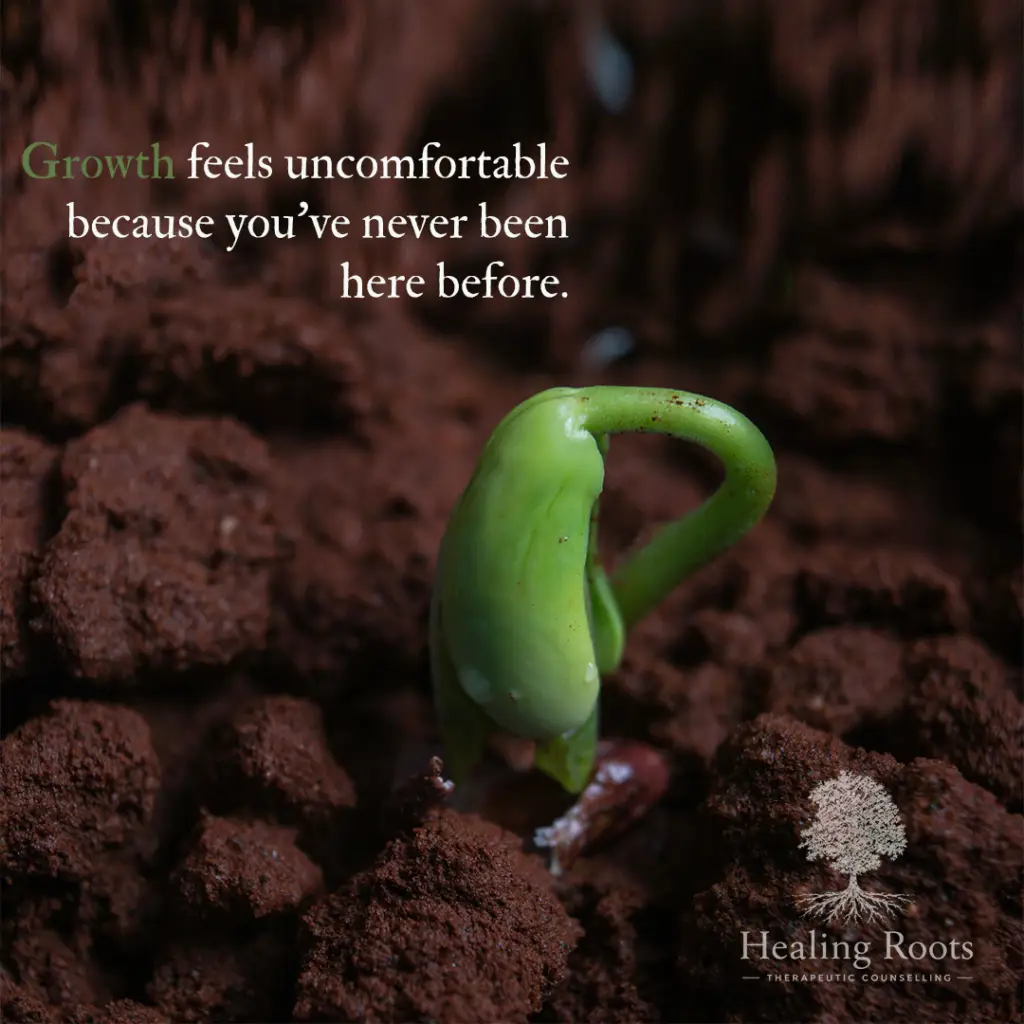
Change may need to become tolerable before it becomes comfortable
I used to think change would feel good if it was the right change.
Now I think that is too simple.
Sometimes change feels good.
Sometimes it brings relief, lightness, energy, or clarity.
But sometimes real change feels awkward for a long time.
It may feel like wearing in boots. Or strengthening a muscle. Or taking a path through long grass before the route has been properly formed.
The old pathway may be deeply worn. Your system may have travelled it for decades. It knows every turn.
A new pathway takes practice.
At first, you may have to choose it deliberately. Clumsily. Repeatedly. With effort. With support. With days where you go back to the old way and wonder whether anything has changed at all.
That does not mean you are failing.
Change may need to become tolerable before it becomes comfortable.
And some forms of change may never feel completely easy. Saying no may always carry a little charge. Disappointing people may never become your favourite activity. Being honest may still bring a flutter of vulnerability.
But perhaps the goal is not to feel nothing.
Perhaps the goal is to stop letting discomfort decide for you.
Necessary discomfort is not the same as harm
There’s an important difference.
I am not suggesting that all discomfort is good, or that you should stay in situations that feel unsafe because “growth is uncomfortable.”
That is dangerous: discomfort is not automatically growth.
Sometimes discomfort is a signal that something is wrong. Sometimes your body is telling you that a person, relationship, environment, or therapeutic relationship is not safe enough. Sometimes discomfort means you are crossing your own limits, overriding your needs, or tolerating harm.
Necessary discomfort is different.
It is the discomfort of acting in alignment with your values, needs, and best interests when your old pattern wants you to abandon yourself. Again.
It is the discomfort of a realistic boundary, not a wall that keeps everyone out.
It is the discomfort of saying no where no is needed, not the isolation of never letting anyone close.
It is the discomfort of allowing someone else to have their feelings, not the abandonment of care.
It is the discomfort of becoming more honest, not becoming cruel.
This is why change needs discernment, support, and self-trust.
Not every discomfort should be pushed through.
But not every discomfort means you should turn back.
A reflection for this week
This week, notice one moment where discomfort feels like proof that you are wrong.
It might be guilt after saying no.
Anxiety after telling the truth.
Nausea after not rescuing.
Restlessness after stopping work on time.
The urge to apologise after expressing a need.
Ask yourself:
Where am I treating discomfort as proof that I am wrong?
Then ask:
What is one small uncomfortable-but-safe experiment I could try this week?
Not a dramatic life overhaul.
Something small.
Pause before saying yes.
Send the shorter message.
Let someone be mildly disappointed.
Work the hours you are paid for.
Tell the truth without wrapping it in seven layers of cushioning.
Rest before everything is finished.
Notice what happens.
Notice what your old pattern predicts.
Notice what actually happens.
And notice, too, that discomfort may come along for the ride.
It does not have to mean you are doing it wrong.
It may mean you are learning a new way to be.